40 Most Iconic Black Cartoon Characters of All Time
From Fat Albert to Miles Morales — the definitive list, organized by type, era, and the traits that made each one unforgettable.
Black cartoon characters didn't just appear on screen. They pushed into spaces that didn't want them, carried cultural weight that other characters never had to, and became mirrors for millions of kids who rarely saw themselves in animation.
This list covers 40 of the most iconic — not ranked, but organized by category. Classic males, iconic women, kid characters, superheroes, body types, design aesthetics. Find who you're looking for, or discover someone you missed.
Classic Male Characters
These are the characters that built the foundation. Most debuted between 1968 and 2005, and their cultural footprint is still felt today.
1. Huey Freeman — The Boondocks (2005–2014)
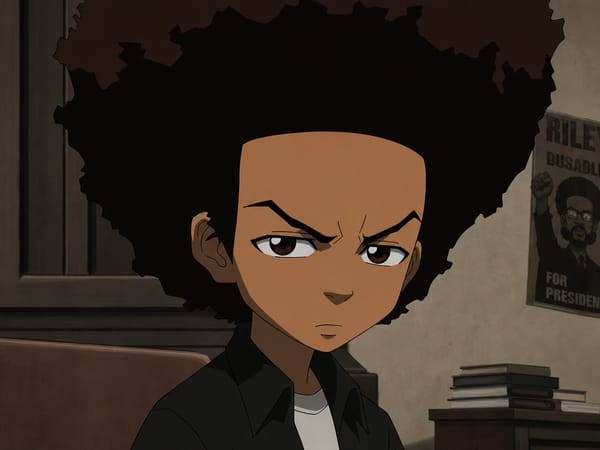
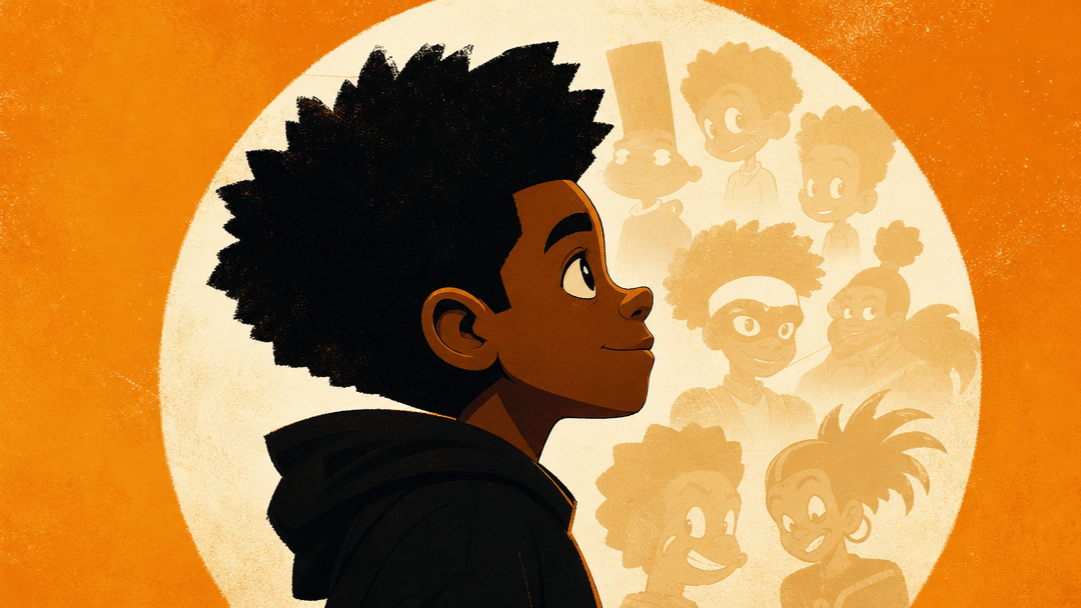
Huey is the most politically sharp character in the history of American animation. A 10-year-old self-described revolutionary living in a mostly white suburb, he carried an afro that functioned almost like a character in itself.
Voiced by Regina King, Huey dissected racism, media, and Black identity in ways prime-time TV rarely touched. His combination of natural hair, angular design, and zero tolerance for nonsense made him an instant visual icon.
2. Riley Freeman — The Boondocks (2005–2014)
Riley is Huey's younger brother and his polar opposite. Where Huey reads books, Riley chases clout. His braided hair, oversized streetwear, and obsession with hip-hop culture made him the definitive Black kid cartoon character of the 2000s. Regina King voiced both brothers — a casting choice that added a subtle layer of intimacy to their dynamic.
3. Fat Albert — Fat Albert and the Cosby Kids (1972–1985)
Fat Albert was groundbreaking before that word got overused. Debuting in 1972, he was among the first Black animated characters to lead his own Saturday morning show. His stocky build and red sweater were immediately recognizable. More importantly, the show tackled poverty, peer pressure, and community in ways almost no children's cartoon did at the time. Fat Albert remains the original big Black cartoon character — and one of the most important animated characters in American history.
4. Frozone / Lucius Best — The Incredibles (2004)
Samuel L. Jackson brought Frozone to life with a charisma that nearly stole the film. Lean, stylish, and ice-powered, Frozone was the rare Black superhero in a mainstream animated movie who wasn't defined by being Black — he was just the coolest person in the room. His moment searching for his supersuit became one of the most quoted scenes in Pixar history.
5. Gerald Johanssen — Hey Arnold! (1996–2004)
Gerald is the keeper of neighborhood mythology. Tall, slender, with a high-top fade that defied cartoon physics, he was Arnold's best friend and the group's unofficial storyteller. His confidence, loyalty, and iconic hairstyle made him one of the most recognizable Black boy cartoon characters of the 90s.
6. Cleveland Brown — Family Guy / The Cleveland Show (1999–2013)
Cleveland started as a supporting character in Quahog and became prominent enough to earn his own spinoff. Soft-spoken, good-natured, and frequently the butt of the joke, he represented a different kind of Black male character — not a hero or a radical, just a man trying to be a decent father and husband.
7. Franklin — Peanuts (1968–present)
Franklin's arrival in the Peanuts gang in 1968 was a genuine act of cultural resistance. Schulz introduced him following letters from readers urging more diversity in the strip — the same year Martin Luther King Jr. was assassinated. He didn't have a lot of lines, but his presence in Charlie Brown's world — sitting at the same Thanksgiving table, playing on the same team — mattered enormously.
Classic Female Characters
Black women in animation have consistently been written as the smartest person in the room. These characters proved it.
8. Penny Proud — The Proud Family (2001–2005, revived 2022)
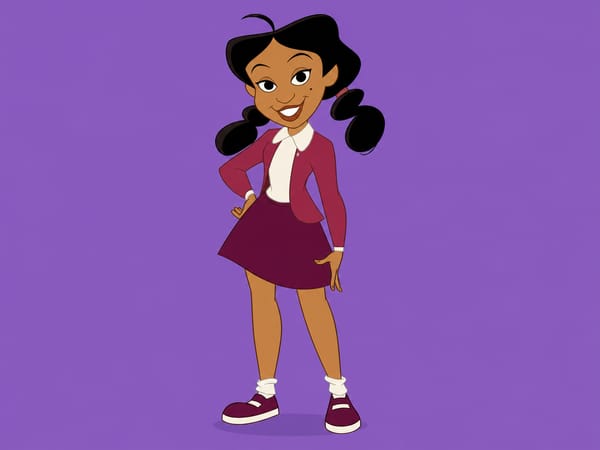
Penny Proud was the first Black girl to lead her own Disney Channel animated series. At 14, she navigated the exact frustrations that real Black teenagers faced — overbearing parents, social pressure, identity questions — without the show turning her into a lesson.
She was just a kid trying to figure things out, and that relatability is why her revival, Louder and Prouder, landed so well with a new generation.
9. Tiana — The Princess and the Frog (2009)
Disney's first Black princess arrived 72 years after Snow White. Tiana is a hard-working chef in 1920s New Orleans who dreams of opening her own restaurant — and unlike most Disney princesses, she doesn't wait for fate to deliver it. She works two jobs. She saves her money. She is turned into a frog and still doesn't lose focus. Voiced by Anika Noni Rose, Tiana set a standard for Black female representation in animation that still holds.
10. Storm / Ororo Munroe — X-Men: The Animated Series (1992–1997)
Storm is the blueprint for the Black female superhero. Born in Kenya, raised in Cairo, and gifted with the power to control weather, she led the X-Men with grace and authority. Her white hair, striking cape, and habit of narrating her own weather commands in full dramatic sentences were instantly recognizable. Storm paved the way for every Black female hero that followed, in animation and beyond.
11. Numbuh 5 / Abby Lincoln — Codename: Kids Next Door (2002–2008)
Abby Lincoln wore a red beret and outthought everyone on her team. As the second-in-command of Sector V, she was consistently the most competent operative in the room — calm, strategic, and quick. Voiced by Cree Summer, who also voiced Susie Carmichael, Numbuh 5 became shorthand for effortless Black girl cool.
12. Susie Carmichael — Rugrats (1991–2004)
Susie entered the Rugrats world as Angelica's foil and ended up stealing the show. Kind, talented (she could sing), and unshakeably confident, she was a toddler who modeled what it meant to stand up to bullies. Her yellow dress and natural hair became visual shorthand for "good energy in the room."
13. Valerie Brown — Josie and the Pussycats (1970–1972)
Valerie Brown holds a distinction most people don't know: she was the first Black female character with a recurring role in a Saturday morning cartoon. The band's bassist and de facto problem-solver, she was smarter than her billing suggested. Without Valerie, the Pussycats wouldn't have survived a single episode.
14. Monique — Kim Possible (2002–2007)
Voiced by Raven-Symoné, Monique was Kim's best friend and resident voice of reason. She was fashionable, direct, and fully her own person — not just a sidekick. Her confidence and individuality made her one of the most memorable supporting characters in early 2000s Disney animation.
Black Kid Cartoon Characters
These characters spoke directly to Black children — and told them they could be smart, curious, brave, and the main character.
15. Doc McStuffins — Doc McStuffins (2012–2020)
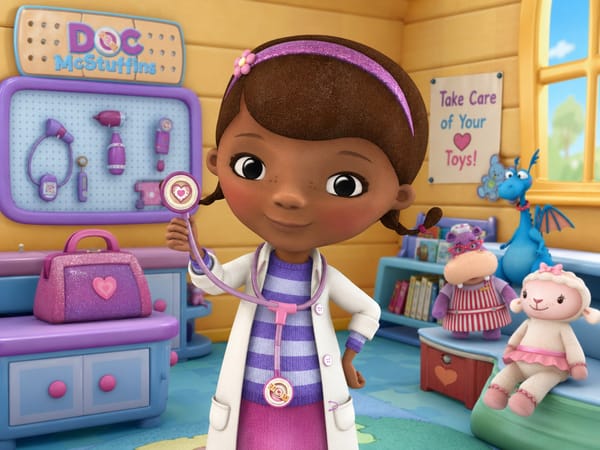
Doc is a seven-year-old Black girl who fixes toys and dreams of becoming a doctor like her mother. The show's premise is simple. Its cultural impact is not.
Doc McStuffins was one of the first animated characters to show young Black girls explicitly pursuing a career in medicine, and the response from Black families — parents posting photos of their daughters watching the show in doctor's coats — became a viral phenomenon.
16. Little Bill — Little Bill (1999–2004)
Little Bill followed a curious kindergartner with an overactive imagination through the everyday moments of childhood. Each episode ended with a lesson, but not a preachy one. Little Bill was simply a Black kid being a kid — which was rarer on children's television than it should have been.
17. Static / Virgil Hawkins — Static Shock (2000–2004)
Virgil Hawkins is a Black teenager who gains electromagnetic superpowers after an industrial accident. But what made Static Shock stand out wasn't the powers — it was the show's willingness to tackle gang violence, gun control, racism, and domestic abuse in a format aimed at kids. Static was proof that Black superhero stories could carry real-world weight and still be entertaining.
18. Craig Williams — Craig of the Creek (2018–present)
Craig is the most modern entry on this list and one of the most quietly important. A Black boy at the center of a Cartoon Network series about childhood adventures, he leads a diverse friend group and navigates the kind of low-stakes, high-meaning situations that define being a kid. The show treats Black childhood as universal — which it is.
19. Cornelius Fillmore — Fillmore! (2002–2004)
Fillmore is a reformed troublemaker who joins his middle school's safety patrol and becomes its best operative. Inspired by 1970s cop dramas, the show was funny, sharp, and consistently gave Fillmore moral complexity. He remains one of the most underrated Black boy cartoon characters in Disney's catalog.
Black Superheroes
Black superhero representation in animation exploded in the 1990s and hasn't slowed down. These are the characters that defined the genre.
20. Miles Morales — Spider-Man: Into the Spider-Verse + animated series
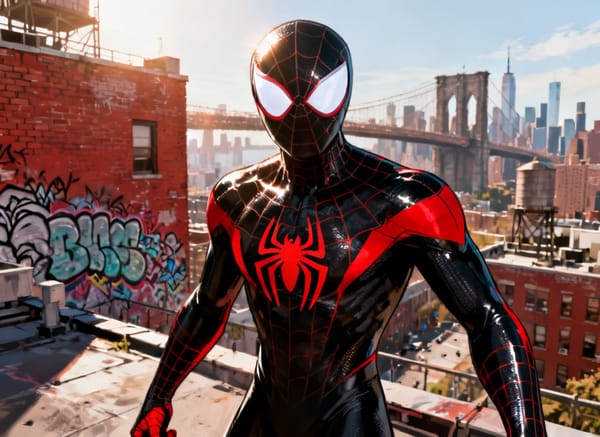
Miles Morales is the most culturally significant Black character in animation history. Afro-Latino, Brooklyn-raised, and inheriting a mantle he didn't ask for, he represents a generation of Black and Latino kids who never saw themselves as the hero.
His design — hoodie, Air Jordans, spray-painted Spider symbol — is the most visually distinct superhero look of the 21st century. The Spider-Verse films made him a global phenomenon.
21. Cyborg — Teen Titans (2003–2006) / Teen Titans Go! (2013–present)
Cyborg is half-human, half-machine, and all personality. His intelligence drives much of the team's strategy, and his humor keeps the show's energy high. Across both the original Teen Titans and the lighter Teen Titans Go!, Cyborg has been a consistent, beloved Black superhero character for over two decades.
22. Spawn — Spawn: The Animated Series (1997–1999)
Spawn is a different kind of Black superhero. Dark, traumatized, and operating in moral grey zones, the HBO animated series was one of the first to present a Black antihero without softening the edges. Keith David's deep, commanding voice gave Al Simmons a presence that few animated characters have matched.
23. Bumblebee / Karen Beecher — Teen Titans (2003–2006)
Karen Beecher designed her own suit. That detail matters. She didn't receive powers from a cosmic accident or a government program — she built her technology herself, making her one of the few animated Black female characters whose abilities came entirely from her own intelligence.
24. Garnet — Steven Universe (2013–2019)
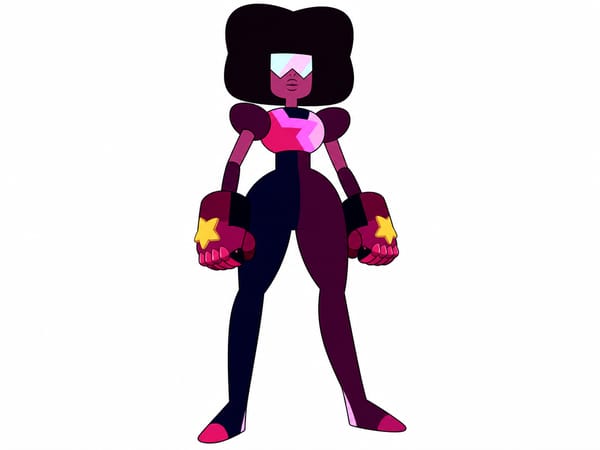
Garnet is the Crystal Gems' leader — stoic, powerful, and voiced by British singer Estelle. Her dark skin, afro puffs, and squared silhouette made her design immediately iconic.
She was also part of the first same-sex marriage depicted on Cartoon Network, adding a layer of representation that went beyond race.
If these characters sparked an idea, Somake's design your own superhero tool lets you build one from scratch — costume, powers, skin tone, and style — no drawing skills needed.
Body diversity in Black animation has always been present, even when it wasn't discussed. These characters were never defined by their size — they were defined by their character.
Big & Fat Black Cartoon Characters
Body diversity in Black animation has always been present, even when it wasn't discussed. These characters were never defined by their size — they were defined by their character.
25. Fat Albert — Fat Albert and the Cosby Kids
The original and still the most prominent. His build was central to his name but irrelevant to his impact.
26. Robert Freeman / Granddad — The Boondocks
A heavyset patriarch whose bluster and old-school pride make him one of the show's funniest and most human characters.
27. Oscar Proud — The Proud Family
A lovably bumbling father whose get-rich-quick schemes consistently backfire, but whose love for his family never does.
Skinny & Tall Black Cartoon Characters
Some of animation's sharpest Black characters have lean, angular designs that make them instantly recognizable.
28. Jodie Landon — Daria (1997–2001)
Slim, sharp-dressed, and consistently the most composed person in Lawndale. Jodie openly discussed the pressure of being a "model minority" — a rare topic for a 90s animated show. She recently got her own spin-off film, confirming her status as an underrated icon.
29. Static / Virgil Hawkins — Static Shock
Lean and lanky, Virgil's slight frame was part of his appeal as a teenager who didn't look like a superhero — until he was one. His wiry build contrasted with the scale of the threats he faced, which made his victories feel earned.
30. Cornelius Fillmore — Fillmore!
Tall for a middle schooler, Fillmore carried himself with the authority of someone twice his age. His height and calm demeanor gave him a natural command presence that made the school safety patrol premise actually believable.
Short Black Cartoon Characters
Short doesn't mean small impact.
31. Riley Freeman — The Boondocks
Ten years old, compact, and convinced he's the most important person in any room. Riley's small stature never stopped him from having the biggest personality in the show.
32. Little Bill — Little Bill
A kindergartner with an enormous imagination. Little Bill proved that the smallest characters could carry an entire series on their own terms.
33. Rallo Tubbs — The Cleveland Show
Five years old with the world-weariness of a middle-aged man. Rallo is the most improbable scene-stealer in the franchise — tiny in size, outsized in every other way.
Lightskin Cartoon Characters
The term "lightskin" in search reflects something real: readers looking for characters who represent the full melanin spectrum within Black communities.
34. Missy Foreman-Greenwald — Big Mouth
Mixed-race, and the show explicitly explores her identity. Her Season 4 arc, where she reconnects with her Black heritage, is one of the more thoughtful treatments of mixed-race identity in animated TV.
35. Miles Morales — Spider-Man: Into the Spider-Verse
As an Afro-Latino character, his complexion reflects the breadth of what Blackness looks like in the Americas.
Afro & African Cartoon Characters
The afro is one of the most politically and culturally loaded hairstyles in history — and in animation, it's become a shorthand for Black pride and authenticity.
36. Franklin — Peanuts
Franklin's natural hair was quietly radical in 1968. In a strip where every other character had simplified, stylized hair, his afro was drawn with care — a small visual choice that carried real weight.
37. Garnet — Steven Universe
Her afro puffs are as iconic as her squared silhouette. Garnet's design is one of the most distinctive in modern animation, and her hair is central to it.
38. Kwame — Captain Planet (1990)
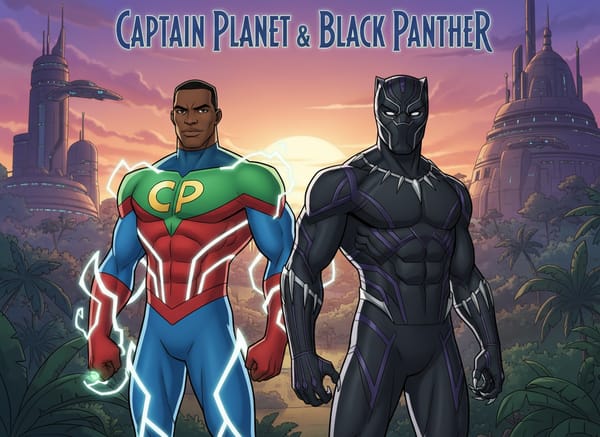
An African Planeteer with the power of Earth, voiced by LeVar Burton — a deliberate choice that added weight to every environmental lesson the show delivered.
39. T'Challa / Black Panther — Various animated series
King of the fictional African nation of Wakanda, he introduced generations of young viewers to the idea that Africa could be a place of advanced civilization, not just a backdrop for poverty narratives.
Funny Black Cartoon Characters
These characters appear in earlier sections — highlighted here for their comedy.
Some of the best comedy in animation has come from Black characters.
Riley Freeman — The Boondocks
His deadpan delivery and unshakeable self-delusion made him endlessly quotable. Riley genuinely believed he was the coolest person alive — and the show never let him be right.
Oscar Proud — The Proud Family
Slapstick ambition in its purest form. Selling inedible snacks, cooking up schemes, refusing to admit defeat — Oscar is peak animated dad comedy.
Rallo Tubbs — The Cleveland Show
Five years old with the world-weariness of a 45-year-old. His one-liners regularly outpaced the adult characters around him.
Bold Cartoon Character Designs
These characters appear in earlier sections — highlighted here for their visual design.
Great character design communicates personality before a word is spoken.
Storm — X-Men: The Animated Series
White hair against dark skin, paired with a sweeping cape — a silhouette that's readable from across a room.
Spawn — Spawn: The Animated Series
Dark armor, chains, and a red cape. The visual opposite of traditional superhero aesthetics — deliberately unsettling.
Frozone — The Incredibles
A clean white suit, minimal and stylish. Exactly like the character wearing it.
What connects these designs: high contrast, strong silhouettes, and visual markers — afros, braids, locs, dark skin — that signal cultural identity without reducing the character to it.
Curious what these characters would look like in real life? Somake lets you see them in real life — upload any cartoon image and generate a photorealistic version.
Animation's diversity has grown measurably in the past decade. These characters represent where Black representation in cartoons stands today.
Modern Characters (2015–2025)
Animation's diversity has grown measurably in the past decade. These characters represent where Black representation in cartoons stands today.
40. Andy Smith — Invincible Fight Girl (2024)
Andy is a Black girl with a single dream: become the greatest professional wrestler in the world. The show is recent, ambitious, and unapologetically Black in its aesthetic and influences — drawing from both WWE and shonen anime. She's the most current entry on this list, and potentially the start of a new wave.
The broader trend is real. Miles Morales anchors Marvel's animated output. Garnet closed out Steven Universe as its most powerful character. Craig of the Creek has been running since 2018 with a Black lead and shows no sign of stopping. The pipeline of Black-led animated content looks stronger than it ever has.
Have a character in mind for the next generation? Somake's comic strip maker turns your idea into a full multi-panel comic strip in minutes.
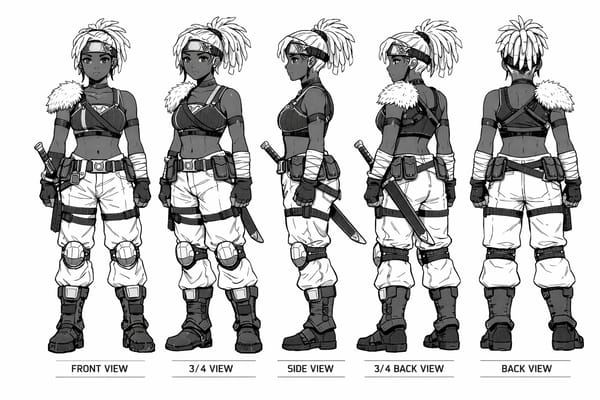
Want to create your own Black cartoon character? Somake's Character Sheet Generator lets you describe any character — skin tone, hairstyle, build, outfit — and generate front, side, and back reference views in comic book, anime, or semi-realistic styles.
No drawing skills needed. Describe your character, pick a style, and generate a complete reference sheet in seconds.
Key Takeaways
Black cartoon characters have been in American animation since 1968, when Franklin integrated the Peanuts gang — but the golden age of representation didn't arrive until the early 2000s.
The Proud Family, Static Shock, and The Boondocks changed what Black-led animated shows could look and sound like.
Body type diversity — Fat Albert, Granddad, skinny characters like Gerald and Huey — has always existed in Black animation, even when it wasn't framed that way.
Miles Morales is the defining Black animated character of the modern era. His design, story, and cultural impact are unmatched.
The pipeline is healthy. Craig of the Creek, Invincible Fight Girl, and the Proud Family revival suggest the next decade will produce more icons on this list.