25 Characters, 4 Visual Archetypes — and Prompts for Each
From Disney princesses to DC heroines — plus ready-to-use Somake prompts for each style.
You can still hum Elsa's theme. You still know exactly what Shego would say in any situation. These characters aren't just nostalgia — their visual design, color palettes, and personality archetypes have become a shared creative language that artists and AI creators keep returning to.
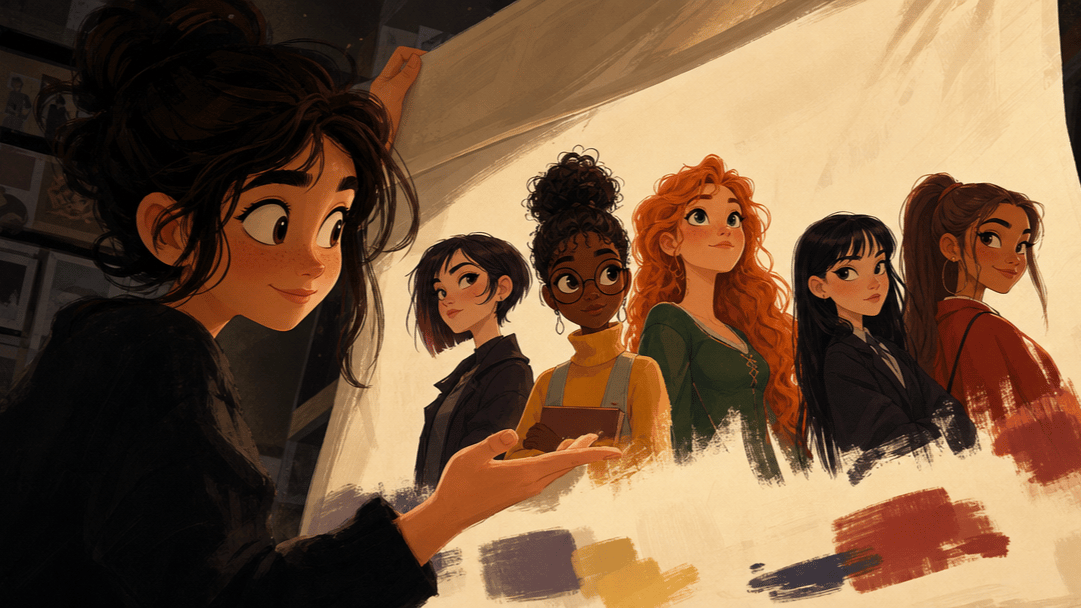
This list covers 25 female cartoon characters grouped by what makes them memorable — not just who they are, but what visual style they represent. At the end of each group, you'll find a Somake prompt you can use right now to generate something inspired by that aesthetic.
Iconic Princesses
The Disney princess lineup has changed more than people give it credit for. The shift from passive heroines waiting for rescue to characters with their own arc, their own song, their own decision — that's the story of this group.
Elsa (Frozen, 2013) is the rare Disney character whose defining moment has nothing to do with a love interest. "Let It Go" isn't a love song — it's a coming-out anthem for anyone who spent years hiding who they are. Her ice-blue palette and silver braid have been replicated in AI art more than almost any other animated character.
Ariel (The Little Mermaid, 1989) gave animation one of its most copied color combinations: deep ocean teal against vivid red hair, lit from below. The contrast is so strong it works even in abstract interpretations.
Mulan (Mulan, 1998) is the only Disney princess who spends most of her film in armor. Her warrior design — clean lines, muted earth tones, topknot — reads as distinctly different from every other character in the princess lineup. When generating Mulan in AI, cosplay-style prompts consistently outperform her princess-dress variants.
Jasmine (Aladdin, 1992) was Disney's first princess of color, and her teal two-piece silhouette is one of the most instantly recognizable designs in the franchise. Her visual language is bold, geometric, and confident — which is exactly why it translates well into AI-generated art.
Moana (Moana, 2016) was the first Disney princess with no romantic subplot. Her story is entirely about her relationship with the ocean and her ancestors — and her design reflects that: warm browns, turquoise water, no crown, no gown.
Rapunzel (Tangled, 2010) has one of the strongest single-frame images in Disney history: a sea of floating lanterns, viewed from a small boat, with seventy feet of glowing hair. The color palette — lavender, gold, soft amber — is still one of the most-used "fairy tale" reference sets in AI image generation.
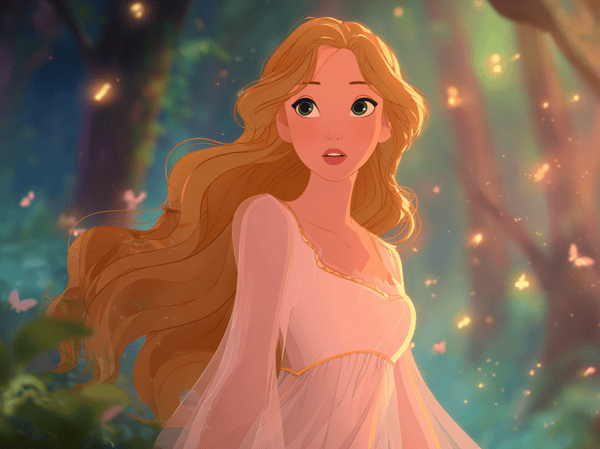
Inspired by this aesthetic? Use the prompt below to generate your own original princess-style character:
Somake prompt: Animated princess female character, long flowing hair, pastel color palette, soft warm lighting, full body portrait, 2D hand-drawn animation style, fairy tale background
Warriors & Heroines
This group earns their place not through beauty or magic, but through what they actually do when things get difficult.
Wonder Woman (DC Animated Universe) needs no introduction, but one detail is worth noting: the DCAU version of Diana is often cited by animators as a masterclass in drawing power without sacrificing femininity. The red-gold-blue palette, the tiara, and the lasso are so visually distinct that two colors and a rope are genuinely all you need in a prompt. Her silhouette reads clearly from a distance — which is rare, and which is why she remains one of the most AI-generated DC characters — her aesthetic translates directly if you generate superhero characters.
Kim Possible (Kim Possible, 2002–2007) was a high schooler who dismantled criminal organizations on her lunch break. She's consistently underrated in "best of" discussions — probably because she made it look easy. Her black-and-green mission outfit is one of the cleanest character designs of the 2000s.
Katara (Avatar: The Last Airbender, 2005–2008) is the only major animated female character who, when her love interest confessed his feelings at a bad time, simply said "not now" — and he respected it. Her arc from untrained waterbender to master is one of the most complete in animated television.
Elastigirl / Helen Parr (The Incredibles, 2004) was quietly the most capable superhero in her family from the start. Incredibles 2 finally gave her a solo mission, and she carried it. Her red-black suit is aerodynamic by design — every curve serves function.
Ahsoka Tano (Star Wars: The Clone Wars, 2008–2020) started as Anakin's assigned sidekick and ended up with her own live-action series. That arc was driven almost entirely by fan demand — a rare case of an audience willing a character into greater cultural significance. Her design is immediately readable: white montrals, blue-grey skin, orange facial markings, twin lightsabers. The color contrast alone makes her one of the most visually distinct characters in Star Wars animation.
She-Ra (She-Ra and the Princesses of Power, 2018–2020) — the 2018 reboot discarded the original's visual language almost entirely and built something new: a queer-coded, emotionally honest story about trauma and found family. The new She-Ra design trades the original's exaggerated hourglass proportions for something more grounded and athletic — broad shoulders, practical armor, warm gold-and-white palette.
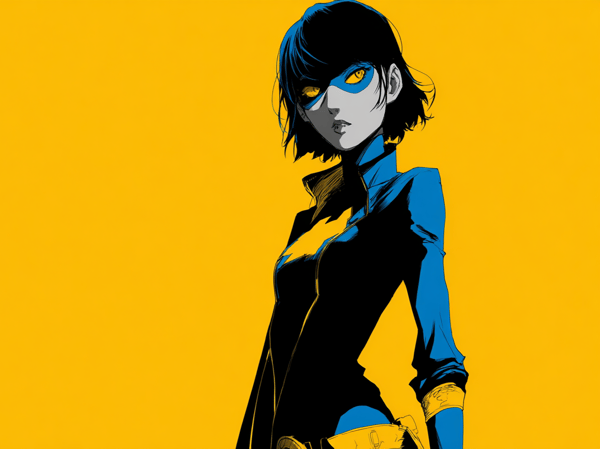
Want to create your own warrior-style character inspired by this aesthetic? Start here:
Somake prompt: Female warrior cartoon character, confident strong pose, superhero costume, bold primary colors, dynamic action stance, clean linework, flat color shading, expressive face
Smart & Witty
These characters win with their minds — and often with their mouths.
Velma Dinkley (Scooby-Doo, 1969–present) has been solving mysteries since before most of her audience was born. Her signature detail: she usually figures it out before she finds her glasses. Orange turtleneck, round frames, short bob — one of the most durable visual identities in cartoon history.
Daria Morgendorffer (Daria, 1997–2002) was 1997's answer to a question nobody knew they were asking: what does a teenage girl who refuses to perform happiness look like? Oversized glasses, deadpan delivery, green jacket — her aesthetic became the visual language of a generation of alt and indie culture.
Megara / Meg (Hercules, 1997) was the first Disney character to explicitly say she didn't need saving. Her opening line — essentially "I'm a damsel in distress, and I've got it handled" — broke a 60-year Disney formula in under ten seconds. Her design is unusually angular for the studio: sharp jaw, asymmetric ponytail, deep purple palette. Nothing soft, nothing accidental.
Shego (Kim Possible, 2002–2007) is technically a villain, but she's the most competent person in any room she enters. She's also the only KP antagonist who actually succeeded in taking over the world — briefly, in a time-travel episode, but still. Green-black color scheme, plasma hands, permanent eye-roll — a great design for a great character.
Lisa Simpson (The Simpsons, 1989–present) has been eight years old for thirty-five years. In that time she's been a jazz musician, a Buddhist, an activist, and the only character in Springfield who seems to notice what's wrong. Fan polls consistently rank her above Homer in terms of character depth.
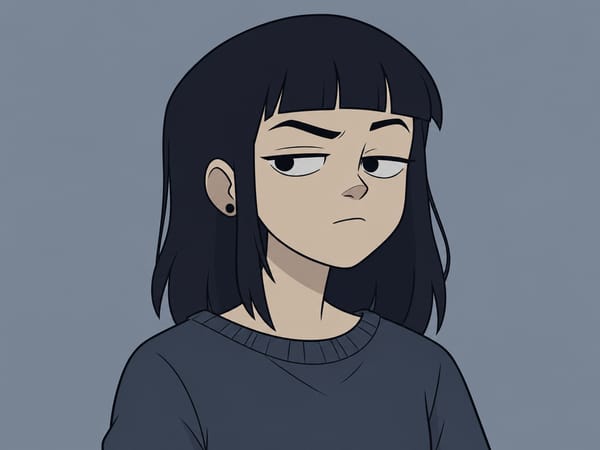
Use the prompt below to generate your own original character in this smart, expressive style:
Somake prompt: young female cartoon character, straight bangs, unimpressed expression, one eyebrow raised, casual sweater, flat indie animation style, desaturated cool color palette, minimal background, bold linework, bust portrait
Visually Striking
Some characters lead with personality. These ones lead with design — and the personality turns out to be just as strong.
Starfire (Teen Titans, 2003–2006) has one of the most deliberately unusual designs in Western animation: bright orange skin, vivid green eyes, and waist-length auburn hair. She placed in the top 3 of Ranker's 115,000-vote poll on most attractive female cartoon characters — partly because the design is striking, partly because her personality (genuinely joyful, occasionally terrifying in combat) makes it land.
Black Cat / Felicia Hardy (Spider-Man: The Animated Series, 1994) ranked #1 in that same Ranker poll. The black suit, platinum blonde hair, and green eyes combination works because of contrast — it's a three-color palette that's impossible to misread. As a character, she's defined by the tension between her genuine affection for Spider-Man and her inability to give up the life.
Black Widow (Marvel Animated) appears across multiple series, but the visual identity stays consistent: black tactical suit, red hourglass motif on the belt, red hair. It's one of the most-replicated animated character aesthetics in AI generation — in part because the restraint of the design makes it straightforward to prompt. No accessories to argue about, no competing colors. Black, red, done.
Jessica Rabbit (Who Framed Roger Rabbit, 1988) is a character entirely aware of how she's been drawn, and uses it. Her observation that she's not bad but was simply designed that way works simultaneously as a deflection and as a meta-commentary on character design itself. Red strapless gown, white-blonde waves, impossible proportions — the design is deliberate maximalism, and the character's depth comes from the gap between that surface and what's underneath.
Raven (Teen Titans, 2003–2006) is the visual origin point for a specific aesthetic: purple-black palette, hood, pale skin, zero expression. Her restraint is the design. Every emotion Raven allows herself to show lands harder because she shows so few of them. The gothic animation archetype traces back, in large part, to this character.
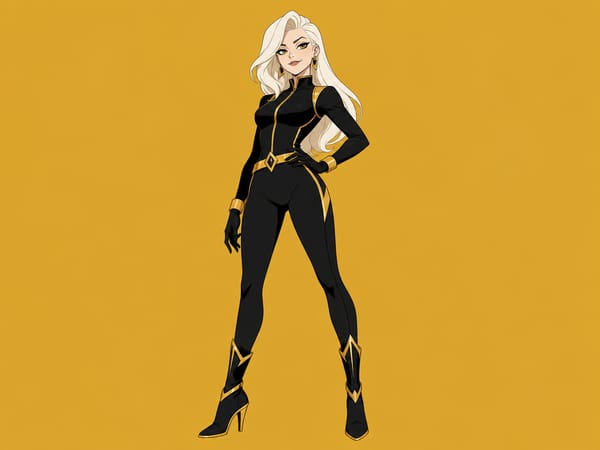
To create your own original character in this bold, graphic style, try this as a starting point:
Somake prompt: Visually striking female cartoon character, bold contrasting colors, strong graphic design, superhero aesthetic, high contrast lighting, flat cel-shaded style, confident dynamic pose, detailed costume
How to Generate These Styles
Each prompt above is a starting point. To get tighter results in Somake, layer three elements:
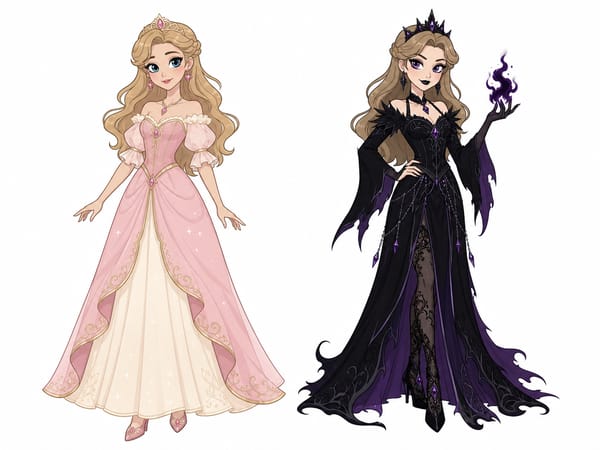
1. Style anchor — the animation reference that sets the overall look. "hand-drawn 2D animation style," "retro Saturday morning cartoon," "stylized 3D animated character" — this is the biggest single lever you have. If you want a full list, browse more style references on the AI image generation page.
2. Physical signature — the one or two details that define the character's look: a specific color, a hairstyle, a costume element. "Auburn hair, teal fin, underwater scene" gets you a mermaid world. "Purple-black palette, hooded cloak, pale skin" lands in gothic territory. The more specific the palette and style reference, the tighter the result — which is why building a character sheet first can help when you're starting from scratch.
3. Mood or lighting note — "soft warm lighting" pushes romantic and soft; "high contrast lighting, dynamic pose" pushes action and tension. A single word here shifts the entire feel of the output.
The more specific the palette and style reference, the tighter the result. Vague prompts get generic outputs. Specific ones — even with just eight or ten words — get something you can actually use. Start generating.
Key Takeaways
These 25 characters span six decades. Their visual languages are still being used as AI generation references in 2026. That's a measure of how well-designed they are.
The four groups aren't a ranking. They're a map. Find the aesthetic that matches how you think, and start there.
Every Somake prompt in this article is copy-paste ready. Try it in Somake and start with the style that felt most like you.
The best AI-generated characters borrow from these archetypes and then add one specific detail that makes the output yours. Create your own original character and that detail is the difference between a reference and a creation.